Florida’s sunny climate is perfect for poolside relaxation. But it can be tough on pool cage screens.
Many pool owners in Florida face the issue of tearing screens. This problem can be frustrating and costly.
Understanding why your pool cage screen keeps tearing is crucial. It helps in finding effective solutions.
This guide will explore common causes of screen tears. We’ll also provide practical repair and maintenance tips.
By the end, you’ll know how to protect your pool cage investment. Stay tuned for expert advice on keeping your pool screen intact.
Common Reasons Pool Cage Screens Tear in Florida
Florida’s environment presents unique challenges for pool cage screens. One common reason for tearing is wildlife interference. Animals like birds and small critters can easily damage screens.
Debris impact is another frequent cause. Falling branches and flying debris during storms can rip your screens. Hence, keeping surrounding trees trimmed is wise.
Moreover, if the installation was poor, or subpar materials were used, tears are likely. A loose screen will sag and wear faster. Proper tensioning during installation is key.
Wear and tear from regular use is inevitable. Screens can degrade from consistent opening and closing. Identifying weak points early can prevent larger issues.
Consider these main causes of screen tearing:
- Wildlife damage
- Storm debris
- Poor materials
- Bad installation
- General wear and tear
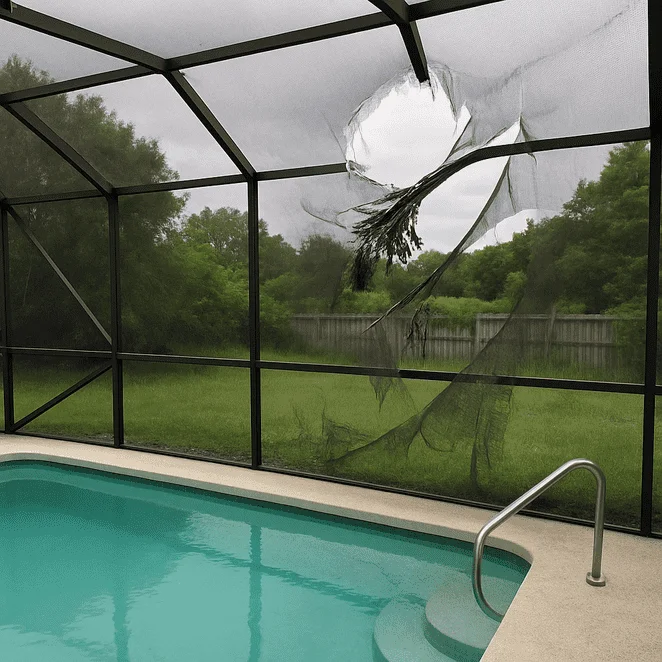
Being aware of these issues helps in choosing the right prevention and repair methods.
How Florida Weather Impacts Pool Screens
Florida’s unpredictable weather takes a toll on pool screens. High winds can stress screen materials, causing them to loosen or tear. This is especially true during hurricane season when storms are more severe.
Another significant factor is UV exposure. The intense sun can weaken screen fibers over time, causing brittleness. Regular inspections for sun damage can prevent unexpected tears.
Humidity plays a role too. Moist conditions contribute to mold growth, which can degrade screens. Maintaining screen cleanliness helps mitigate this problem.
Weather-related impacts on pool screens include:
- High winds
- UV exposure
- Humidity and mold
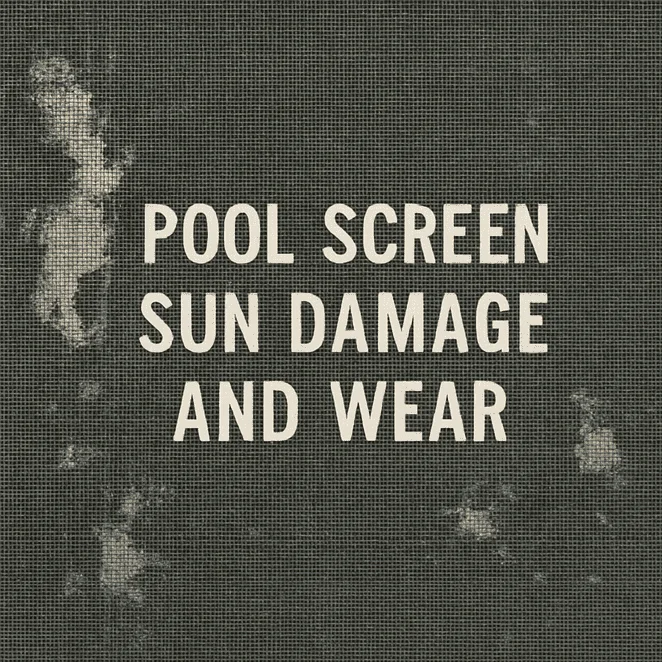
Understanding these effects can guide better maintenance and material choice.
Material Quality and Installation Issues
The quality of screen materials significantly affects their durability. Low-quality materials tear easily, especially under Florida’s harsh conditions. Investing in premium, UV-resistant screens can save money in the long run.
Improper installation also leads to common screen issues. Screens that are too tight or too loose are prone to tearing. Proper tensioning during installation is crucial.
Consider these factors when assessing your screen’s longevity:
- Quality of materials
- Installation techniques
- Screen tension
Ensuring high-quality materials and proper installation practices can greatly enhance the lifespan of your pool cage screen, reducing the need for frequent repairs.
The Role of the Aluminum Frame in Screen Longevity
The aluminum frame is the backbone of your pool cage screen. A sturdy frame ensures the screen remains taut and secure. Weak or damaged frames compromise the screen’s integrity.
Regular inspections help identify signs of frame damage, such as rust or bends. Ignoring these signs can lead to premature screen tears.
Key aspects of aluminum frame maintenance include:
- Checking for rust or corrosion
- Ensuring structural integrity
- Straightening any bends or warping
Proper frame maintenance is vital for the long-term durability of your pool cage screen.
Signs Your Pool Cage Screen Needs Repair or Replacement
Recognizing early signs of screen damage can save time and money. Regular checks allow for timely repairs, extending the screen’s lifespan.
Look for visible damage such as tears or sagging sections. Holes or frayed edges indicate the need for immediate repair.
Be alert to these specific signs of wear:
- Noticeable tears or holes
- Sagging or loose screen areas
- Frayed or weakened edges
Timely addressing these issues prevents larger problems, ensuring your pool area remains safe and enclosed. Regular maintenance checks are essential for spot-on repairs or replacements.
DIY Pool Screen Repair: Step-by-Step Guide
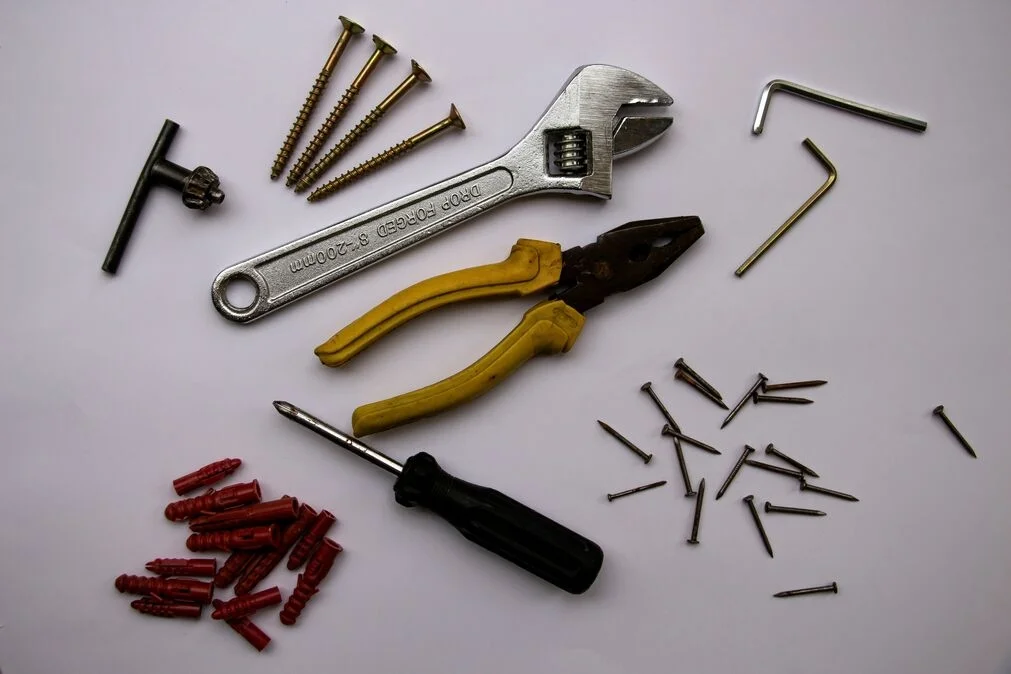
Minor pool screen damage can often be fixed with a DIY approach. Having the right tools is crucial for effective repair.
Start by purchasing a screen repair kit, available at most hardware stores. These kits usually include all necessary tools.
Here’s a simple step-by-step guide to repair your pool screen:
- Clean the damaged area with mild soap and water.
- Trim any frayed edges around the tear.
- Cut a patch from the repair kit slightly larger than the tear.
- Attach the patch using the adhesive provided or sew it with a needle and thread for added strength.
Inspect your work for holes or weak spots after the repair. Ensure the patch is secure and taut for lasting results. Regular maintenance will keep your screen intact.
When to Call a Professional for Lanai or Pool Screen Repair
Certain situations require professional help rather than a DIY fix. Extensive screen damage or issues with frame integrity demand expert intervention.
Here are signs it might be time to call a professional:
- Damage covers multiple screen panels.
- The aluminum frame is bent or corroded.
- Previous DIY repairs aren’t holding up.
Professional services ensure high-quality repairs and often come with a warranty, offering peace of mind.
Preventive Maintenance Tips for Florida Pool Owners
Regular maintenance can significantly extend the life of your pool cage screen. Simple, consistent care minimizes the risk of damage.
Consider implementing these maintenance practices:
- Clean screens regularly to remove dirt and debris.
- Inspect for loose or sagging areas monthly.
- Check the aluminum frame for signs of corrosion.
Protect your investment by being proactive. Routine checks and cleaning help maintain screen integrity, ensuring your pool area stays secure. A bit of effort now can save you from extensive repairs later.
Choosing the Right Screen Material for Florida Conditions
Selecting appropriate screen materials is crucial for withstanding Florida’s challenging weather. The choice can greatly affect the screen’s durability and resilience.
Consider the following materials:
- Fiberglass: offers flexibility and cost-effectiveness.
- Polyester: known for strength and durability.
- Aluminum: excellent for resisting corrosion.
High-quality, UV-resistant materials provide better protection against sun damage and prolong your screen’s life. Evaluate each option’s pros and cons in terms of cost, maintenance needs, and local weather performance. Making the right choice will lead to a longer-lasting pool cage screen.
Protecting Your Pool Cage Investment
Maintaining your pool cage is crucial for a long-lasting structure. By addressing issues like tearing quickly through routine maintenance services, you can save on costly repairs.
Regular inspections and using the right materials help keep your cage in top shape. Understanding common problems allows you to implement preventive measures effectively. Taking proactive steps ensures your pool cage remains strong and durable. If needed, don’t hesitate to get a free estimate for professional repair or rescreening.