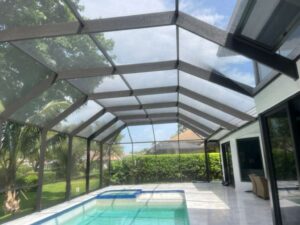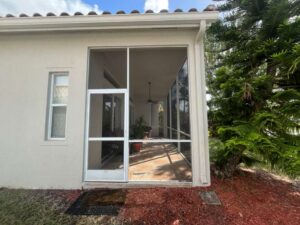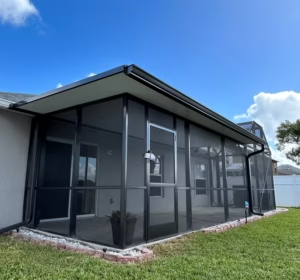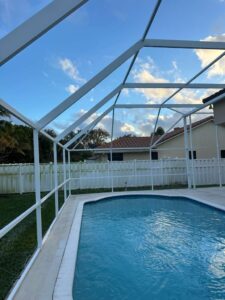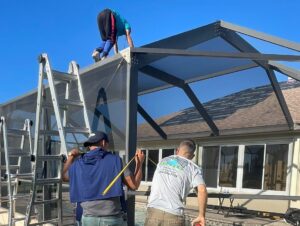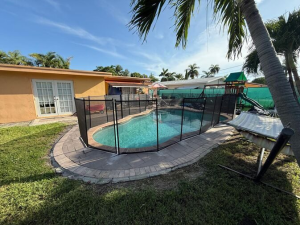
Pool Cage Painting in South Florida: Process, Cost Factors, and Repair Checks
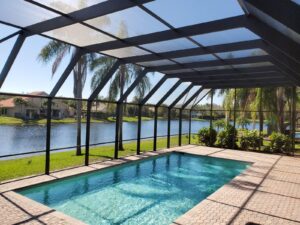
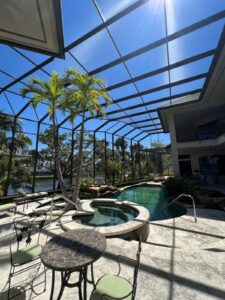
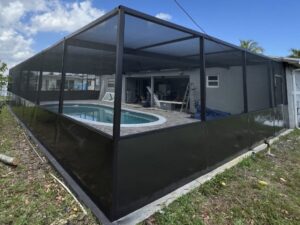
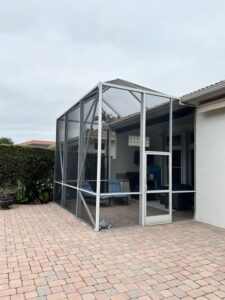
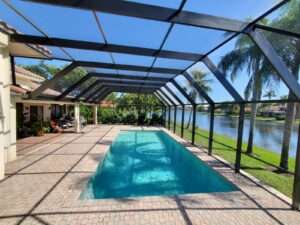
Florida sun, rain, humidity, salt exposure, cleaning chemicals, and ordinary wear can leave an aluminum pool cage faded, chalky, stained, or uneven. Painting may improve appearance and renew surface protection when the enclosure is an appropriate candidate and the preparation matches its actual condition.
Painting does not repair structural damage, replace failed fasteners, correct a moving frame, or restore torn screen. Those conditions must be identified and handled within the correct service scope before or alongside coating work.
Request a pool cage painting estimate for an existing enclosure in Miami-Dade, Broward, or Palm Beach County.
When Pool Cage Painting May Be Appropriate
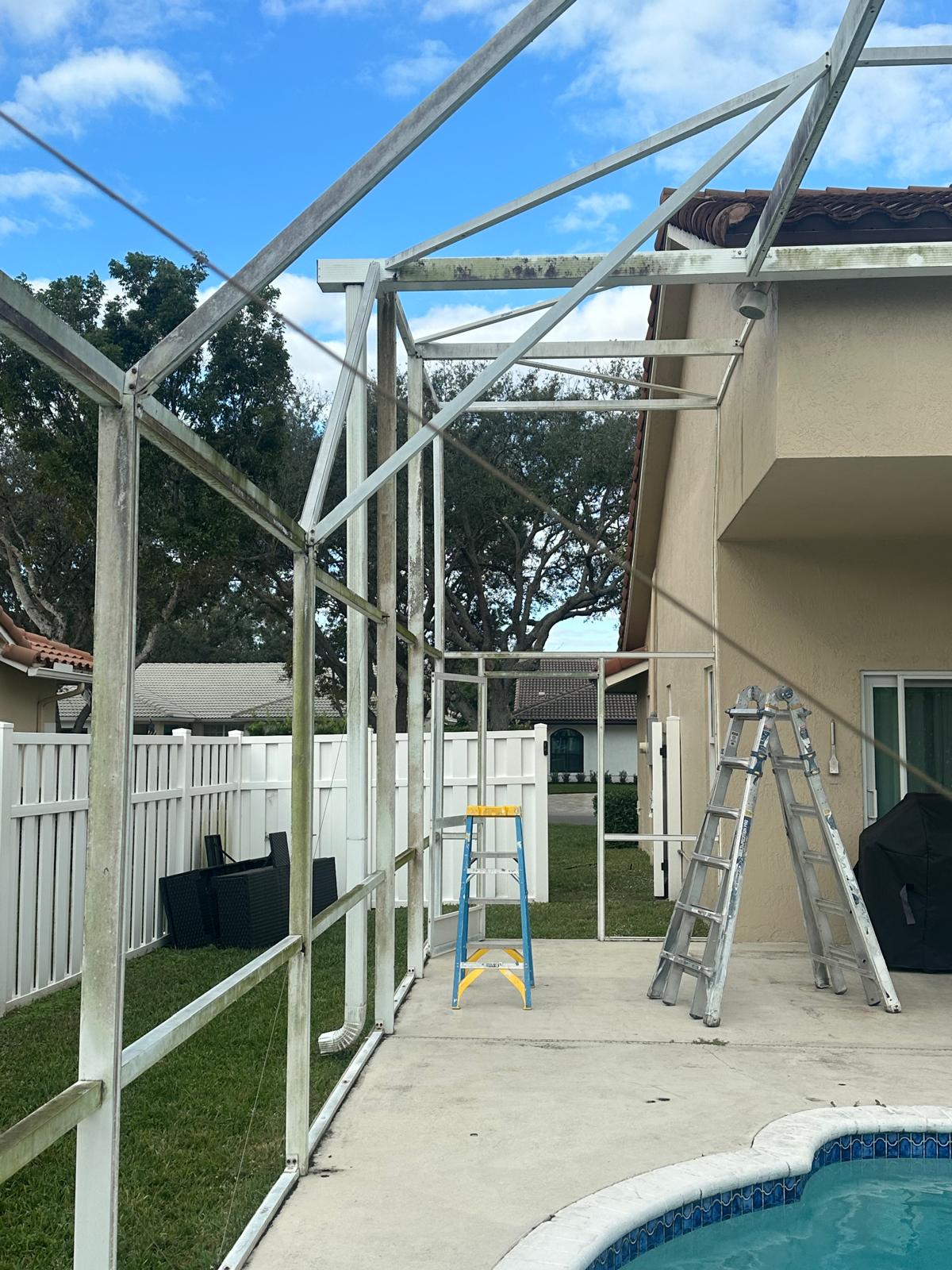
- The existing finish is faded, chalky, stained, or visually uneven.
- Surface oxidation or isolated corrosion can be prepared within the approved work scope.
- The frame is suitable for coating after visible-condition review.
- The owner wants to refresh the enclosure without making unsupported structural changes.
- Necessary screen, fastener, door, or minor enclosure work can be coordinated in the proper order.
When Painting Alone Is Not the Answer
| Observed condition | Why coating alone is insufficient | Next step |
|---|---|---|
| Torn, brittle, or loose screen | Paint does not restore screen tension or close holes | Evaluate repair or rescreening before final coating scope |
| Loose, rusted, or failed fasteners | Coating over failed hardware does not restore the connection | Inspect and coordinate appropriate fastener service |
| Bent, cracked, separated, or moving frame members | Painting is cosmetic and protective, not a structural repair | Obtain the appropriate qualified assessment before coating |
| Active leaks or failed sealant at adjacent surfaces | Moisture and movement can undermine preparation and finish | Identify and address the source within the correct service scope |
| Extensive coating failure or incompatible prior coating | The surface may require a different preparation or coating plan | Perform a condition-based coating assessment |
Our Pool Cage Painting Process
1. Visible-condition inspection
We review accessible frame surfaces, coating condition, oxidation, corrosion, screens, doors, fasteners, sealant areas, nearby finishes, vegetation, pool-deck protection, and site access. This inspection defines what is included and what requires a separate repair or specialist.
2. Scope, color, access, and protection plan
The approved scope identifies the areas to be coated, excluded items, color, access method, masking and protection needs, known repair coordination, weather limitations, and estimated schedule.
3. Cleaning and surface preparation
Surfaces are cleaned and prepared according to their verified condition. Loose or failing material is addressed within scope, and surrounding screens, glass, pool equipment, decking, landscaping, and adjacent finishes are protected as required.
4. Repair coordination
If the visible inspection identifies torn screens, failed fasteners, door issues, or another enclosure concern, the sequence is confirmed before coating. Painting should not hide an unresolved condition.
5. Compatible primer and coating application
The coating system is selected for the prepared aluminum surface and verified project conditions. Product choice and number of coats depend on the substrate, prior coating, preparation, exposure, color, and manufacturer instructions.
6. Final visual review and cleanup
After application and required drying conditions, the work area is reviewed for the agreed visible scope, masking is removed, and project debris is cleared.
Pool Cage Painting Cost Factors
TD Screen FL does not publish one universal pool cage painting price because the scope can change materially from one enclosure to another.
| Cost factor | How it affects the scope |
|---|---|
| Enclosure size and height | Affects surface area, access, labor, masking, and material use |
| Existing coating condition | Chalking, peeling, oxidation, and incompatible coatings can require additional preparation |
| Corrosion and fastener condition | May require separate repair coordination before coating |
| Screen condition | Torn or brittle screen may need repair or rescreening in the correct sequence |
| Access and protection | Pool decks, landscaping, glass, roofs, neighboring property, and equipment can change the protection plan |
| Color and coating system | Existing color, approved new color, substrate, and product requirements affect labor and materials |
| Weather and drying conditions | Can affect scheduling and the time required between preparation, coats, and final review |
A written estimate should identify the inspected scope and exclusions. Do not rely on a price range that was not based on the actual enclosure.
Painting, Rescreening, and Fastener Work: Correct Sequence
The correct order depends on the enclosure. If screen removal is required for access or the mesh is already failing, screen enclosure rescreening may need to be coordinated with painting. If fasteners are visibly corroded or failing, review pool cage screw replacement before coating hides the condition.
TD Screen FL will define only the work within its approved scope. Structural design or code conclusions require the appropriate qualified professional.
Service Area
Pool cage painting estimates are available for existing enclosures within TD Screen FL’s confirmed service area in Miami-Dade, Broward, and Palm Beach counties. Availability and project scope are confirmed before scheduling.
Frequently Asked Questions
How much does pool cage painting cost?
Cost depends on enclosure size and height, access, coating condition, preparation, corrosion, screens, fasteners, masking, color, coating system, and weather. An inspection-based estimate is more reliable than a universal range.
How long does pool cage painting take?
The timeline depends on size, height, access, preparation, repairs, coating requirements, drying conditions, and weather. TD Screen FL confirms an estimated schedule after reviewing the actual enclosure.
How long will the new finish last?
No single lifespan applies to every project. Longevity depends on preparation, coating compatibility, application, sun, moisture, salt exposure, cleaning, maintenance, and the condition of the underlying enclosure.
Can a pool cage be painted without removing the screens?
That decision depends on the coating method, access, screen condition, masking plan, and approved scope. Screen removal or rescreening may be appropriate when mesh is damaged or prevents correct preparation and application.
Does painting repair corrosion or structural damage?
No. Surface preparation and coating can address suitable surface conditions within scope, but paint does not restore a failed fastener, cracked member, loose connection, bent frame, or other structural problem.
What type of paint is used on a pool cage?
The coating system should be selected for the verified aluminum surface, existing finish, preparation, exposure, color, and manufacturer instructions. TD Screen FL confirms the approved system for the specific project rather than promising one universal product.