
Screen enclosure removal should begin with a clearly defined target: the existing enclosure, the approved sections to be removed, and the components that must remain protected. This article applies to screen-enclosure removal only. It does not describe general building, wall, fence, shed, roof, or structural demolition.
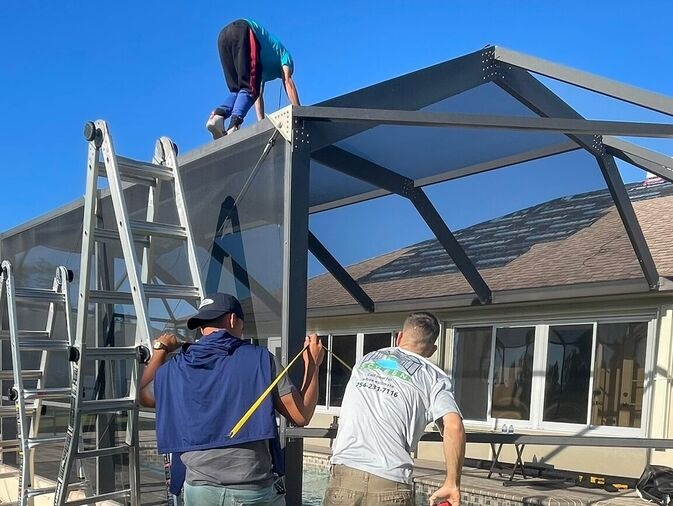
Confirm the Exact Structure and Removal Target
Identify the screen enclosure by address and photograph it from several clear angles. State whether the request concerns the complete enclosure or selected screen-enclosure sections. The estimate should name any panels, doors, framing sections, fasteners, or related components included in the approved scope.
Document Access and Adjacent Conditions
Show the available access and the areas connected to or surrounding the enclosure, including the pool deck, walls, roof connections, gates, landscaping, and other nearby surfaces. These conditions help define what must remain protected and whether another provider controls part of the project.
What the Written Removal Scope Should Identify
- The exact enclosure sections and components included
- The connected items and nearby surfaces that remain protected
- Whether debris handling is included and, if so, what material it covers
- Every known exclusion and the condition expected at handoff
Do Not Assume Outside Work Is Included
Do not assume permitting, engineering, utility work, structural building work, roofing, electrical work, plumbing, or another contractor’s work is included. Any outside requirement must be confirmed with the appropriate provider before the screen-removal scope is approved.
Define the Handoff
If removal supports another project, the approved scope should state what remains after TD Screen FL’s work and which surfaces, openings, or components transfer to the next provider. The screen-removal estimate should not make promises for work controlled by someone else.
Request a Screen-Enclosure Removal Estimate
Review the dedicated screen enclosure removal service and request an estimate for the existing enclosure. The final scope depends on the visible condition, access, and approved work.