Pool enclosure screens face sun, rain, debris, and normal use. Damage may be limited to one panel, or it may affect mesh throughout the enclosure. The correct service depends on the screen condition, frame, spline, doors, hardware, access, and the homeowner’s preferred mesh.
A site inspection should determine whether focused repair or a broader rescreening scope is appropriate. Generic price ranges cannot account for the actual enclosure condition or project requirements.
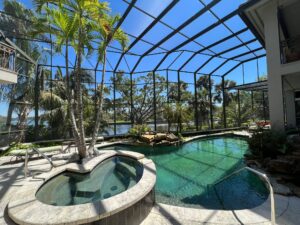
Quick Answer: Panel Repair or Full Rescreening?
If damage is limited to one or a few panels and the surrounding mesh remains serviceable, focused pool screen repair may be enough.
If mesh is brittle, loose, faded, sagging, or damaged across multiple panels, a full enclosure rescreening may be the more practical scope.
Screen work should also be separated from frame, door, fastener, gutter, or structural concerns that require a different service.
Signs That Focused Panel Repair May Be Appropriate
Focused repair may be considered when:
- Damage is limited to one or a few panels.
- The surrounding mesh remains flexible and secure.
- The spline and frame grooves appear serviceable.
- The enclosure does not show widespread sagging or recurring screen failure.
- The affected panel can be reached and repaired safely.
An inspection is still required because visible screen damage may not show the complete condition of the spline, frame, or adjacent panels.
Signs That Full Rescreening May Be Appropriate
A broader rescreening scope may be considered when:
- Several panels are torn, loose, or sagging.
- Mesh feels brittle or shows widespread deterioration.
- Spline is loose or failing in multiple sections.
- Visibility or airflow has declined throughout the enclosure.
- Isolated repairs would leave many other worn panels in place.
Full rescreening replaces the selected enclosure mesh. It does not automatically include structural aluminum repair, door repair, hardware replacement, painting, gutters, or other restoration work unless those items are included in the approved scope.
Mesh Options for Florida Pool Enclosures
Standard 18×14 Mesh
Standard 18×14 mesh is a common option for pool and patio enclosures. It provides a practical balance of airflow, visibility, and general insect control.
20×20 Small-Insect Mesh
20×20 no-see-um mesh provides better small-insect control than standard 18×14 mesh. Its tighter weave may reduce airflow, so the enclosure and homeowner priorities should be considered before selection. It must not be described as bug-proof or no-see-um-proof.
Pet Screen and TuffScreen
Pet screen and TuffScreen are stronger options for areas that receive repeated pet contact or heavier wear. They are not pet-proof, chew-proof, tear-proof, or escape-proof.
Florida Glass or Glas-Shield
Florida glass or Glas-Shield may be used on lower panels or selected areas when privacy or additional coverage from water, dirt, leaves, or debris is desired. It can reduce airflow and visibility and should not be described as a waterproof wall.
Solar Screen and Super Screen
Solar screen may help reduce sun exposure and heat in selected applications.
Super Screen may be considered only after the exact manufacturer data, intended application, frame and spline compatibility, and project requirements are reviewed. It must not be described as damage-proof, animal-proof, tear-proof, or suitable for every enclosure.
What the Inspection Should Separate
The inspection should document:
- Mesh and spline condition
- Frame grooves and visible aluminum condition
- Doors, rollers, handles, hinges, and related hardware
- Loose, missing, rusted, or failing fasteners
- Access to roof and elevated panels
- Gutter or super-gutter concerns
- Areas that may require another qualified professional
When the need extends beyond mesh to coatings, doors, hardware, or other enclosure components, screen enclosure restoration may require a separate or broader scope.
Do not climb the enclosure, walk on screen-roof panels, or touch unstable, structural, or electrical conditions.
What Affects Rescreening Scope and Pricing?
Project scope and pricing depend on factors such as:
- Enclosure size and panel layout
- Number and location of affected panels
- Selected mesh
- Access and elevation
- Existing spline and frame-groove condition
- Doors, hardware, kick plates, or other separately approved items
- Removal and disposal requirements
- Frame or restoration work outside the screen scope
Do not publish a generic price range. The available scope and estimate should be based on the inspected condition and approved work.
Frequently Asked Questions
Can only a few pool enclosure panels be repaired?
Yes, focused panel repair may be appropriate when damage is limited and the surrounding mesh, spline, and frame remain serviceable. Inspection determines whether isolated repair is practical.
Does full rescreening include aluminum-frame repair?
No. Full rescreening addresses the approved screen-mesh scope. Aluminum-frame repair, fasteners, doors, painting, gutters, and structural work are separate unless specifically included.
Which pool enclosure mesh should I choose?
The choice depends on airflow, visibility, small-insect concerns, privacy, pet contact, exposure, existing frame condition, and budget. No mesh should be presented as completely insect-proof, pet-proof, or damage-proof.
Request a Pool Enclosure Rescreening Estimate
TD Screen FL can inspect the enclosure, document the visible condition, and explain whether focused repair, full rescreening, or another enclosure service is appropriate. request an estimate.