
Choosing a pool screen repair service starts with the condition of the existing enclosure and the clarity of the proposed work. A useful estimate should separate the damaged area from unaffected components and explain what is included, excluded, and still uncertain.
Start With the Existing Condition
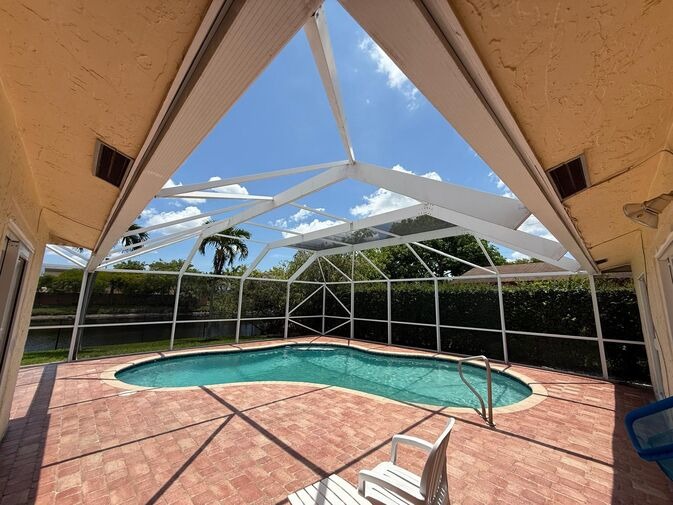
A torn panel, loose spline, door-screen problem, or worn hardware may fit a focused pool screen repair when the surrounding enclosure remains suitable. Repeated mesh or spline wear across several panels may support a screen enclosure rescreening review instead.
Compare the Inspection and Written Scope
Ask how the affected area will be inspected, which components are included, what materials or repair methods apply to the confirmed condition, and which items are excluded. The written scope should match the visible problem rather than rely on broad promises.
Questions to Ask Before Approving Work
Confirm the exact affected panels or components, whether door or hardware work is included, how changes to the scope will be handled, and what condition will remain after the approved work. If a structural, roofing, fascia, electrical, engineering, or other separate issue is visible, it should be identified as outside the screen-repair scope unless specifically approved.
Avoid Unsupported Comparisons
Provider selection should not depend on unverified “best,” ranking, pricing, warranty, durability, or result claims. Compare the inspection, written scope, exclusions, communication, and evidence that the proposed work fits the existing enclosure.
Request a Condition-Based Estimate
Describe the visible damage and whether it appears in one area or across several panels or components. Request an estimate so the existing enclosure can be reviewed and the available repair or rescreening scope can be confirmed.