

Quick answer: an outdoor-rated fan can improve perceived comfort by moving air across people in a screened patio or lanai. It does not refrigerate the enclosure, remove all humidity, guarantee insect control, or replace shade and ventilation.
Fan selection and installation are electrical and mounting decisions. Use a product listed by its manufacturer for the actual damp or wet location, follow its instructions, and use an appropriately qualified electrician for fixed wiring or installation.
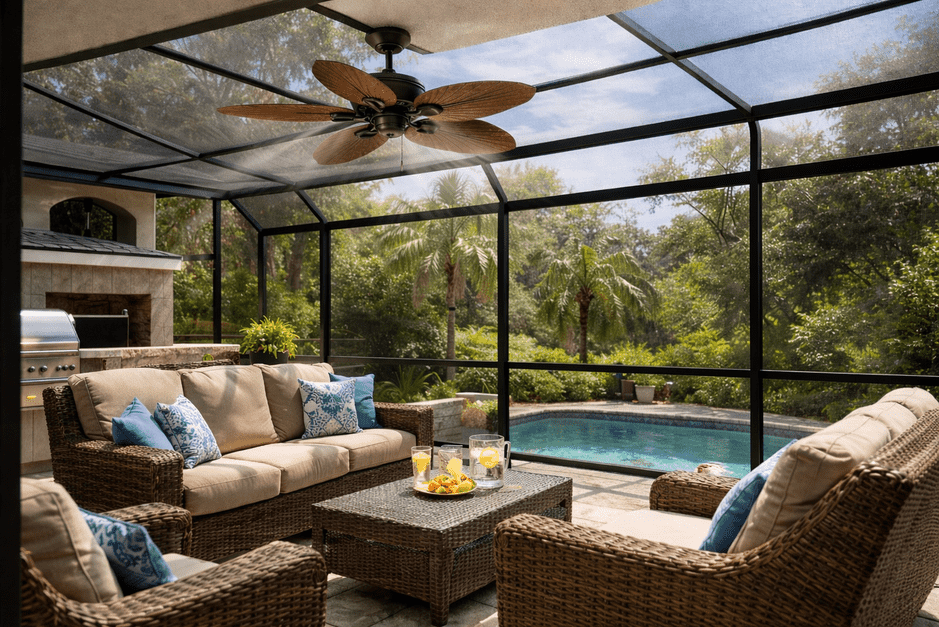
What an Outdoor Fan Can Do
- Move air through occupied seating and dining zones.
- Improve perceived comfort when air passes across the skin.
- Reduce stagnant pockets when placement works with the enclosure layout.
- Support natural airflow without closing the screened space.
A fan does not necessarily lower the measured air temperature. Results depend on fan size, speed, placement, ceiling height, obstructions, open area, heat, humidity, and weather.
Damp-Rated vs. Wet-Rated
| Location condition | What to verify |
|---|---|
| Covered and protected from direct water | Whether the exact fan is listed for the damp location and installation orientation |
| Exposed to wind-driven rain, spray, or direct water | A product specifically listed for the applicable wet location |
| Near a pool or other regulated area | Current electrical, bonding, clearance, and local requirements |
| Existing electrical box or support | Whether it is rated to support the fan and compatible with the manufacturer’s system |
Do not infer a location rating from appearance, blade material, or the word “outdoor” in an advertisement. Verify the listing and instructions for the exact model.
Placement Questions to Answer
- Where do people sit, walk, open doors, or use the pool deck?
- What are the required blade clearances from floors, ceilings, walls, screens, doors, and fixtures?
- Will roof members, lighting, heaters, furniture, or screen panels interrupt airflow or create a collision risk?
- Is the mounting point designed to support a fan?
- Can controls and wiring be installed for the actual exposure and local requirements?
Screen-Enclosure Conditions to Inspect First
Look for loose or torn roof screen, movement, damaged framing, corrosion, water intrusion, failed fasteners, or an uncertain mounting surface. Do not attach electrical equipment to a screen-enclosure member unless the design, product instructions, and qualified installer confirm that the mounting is appropriate.
Fan and Insect Expectations
Air movement may make some occupied zones less comfortable for flying insects, but a fan does not seal torn mesh, open door gaps, loose spline, or failed lower edges. Repair the enclosure openings that allow pests to enter.
Maintenance
- Follow the fan manufacturer’s cleaning and inspection schedule.
- Turn off power before maintenance according to the instructions.
- Watch for unusual noise, wobble, corrosion, loose hardware, damaged controls, or water exposure.
- Keep screen panels, doors, and the surrounding enclosure serviceable.
TD Screen FL Service Boundary
TD Screen FL can assess visible screen and enclosure conditions within its confirmed service scope. It does not claim to perform fan electrical installation through this article. For enclosure damage, review patio screen repair or request an estimate.
Frequently Asked Questions
Does an outdoor fan cool a screened patio?
It can improve perceived comfort by moving air, but it does not necessarily lower the actual air temperature. Shade, humidity, layout, fan placement, and weather affect the result.
Can any ceiling fan be used in a screen enclosure?
No. Verify the exact model’s damp- or wet-location listing, mounting requirements, clearances, and installation instructions for the actual location.
Will a fan keep bugs out?
No. Air movement may discourage some insects near the fan, but intact screen, seated spline, closing doors, and sealed gaps are the primary enclosure controls.